Buying in Mexico
U.S. Taxes on a House in Mexico
September 1, 2026 · 4 min read

Buying a house in Mexico does not take you out of the U.S. tax system. Your accountant may not bring it up, because most U.S. accountants rarely see it. It is worth knowing what the questions are before April.
This is general information, not tax advice. Cross-border tax turns on facts that are specific to you — your residency, how you hold title, whether you rent it. Take it to a CPA who does U.S.–Mexico work. There are several in San Diego who do nothing else.
While you just own it
If the house is for your own use and earns nothing, the U.S. side is usually quiet. There is no U.S. property tax on foreign real estate and no annual return triggered by simply owning a house abroad.
Two things people get wrong here:
Real estate by itself is not an FBAR item. FBAR reports foreign financial accounts. A house is not one. But a Mexican bank account you open to pay utilities, property taxes or trustee fees is — and if your foreign accounts together top $10,000 USD at any point in the year, that report is due. It is a common way people find themselves unexpectedly late.
The fideicomiso used to be the scary one. For years there was real debate about whether a Mexican land trust had to be reported as a foreign trust on Forms 3520 and 3520-A, with penalties that started at $10,000. The IRS addressed this in Revenue Ruling 2013-14, which treats a qualifying Mexican land trust as not a trust for those purposes when the bank holds bare legal title and the beneficiary holds the ownership rights. Most standard fideicomisos are structured this way — but "most" is not "yours." Have your CPA look at the actual trust agreement.
On the Mexican side, you will pay the annual predial — property tax. It is low by California standards, often a few hundred dollars a year, and it is paid to the municipality. Pay it in January; most municipalities discount for paying early.
If you rent it out
Now both countries want to hear from you.
Mexico taxes the rental income where the property is. Non-residents are taxed on rental income from Mexican real estate, and there is a deduction option that lets you take a fixed percentage of gross rents without receipts, plus the property tax. Whoever manages the property will usually handle withholding and invoicing.
The U.S. also taxes it, because U.S. citizens and residents are taxed on worldwide income. You report the rental on Schedule E like any other rental.
You are generally not taxed twice on the same income: the foreign tax credit lets you offset U.S. tax by Mexican tax paid on that income. Getting it right depends on documenting what you actually paid in Mexico, which means keeping the Mexican receipts — the comprobantes fiscales — not just your bank statements.
One asymmetry that surprises people: U.S. depreciation rules for foreign residential rental property use a 30-year schedule, not the 27.5 years you would use domestically. Small difference, wrong number on the return.
When you sell
Mexico taxes the gain. Non-residents selling Mexican real estate face withholding at closing, calculated by the notary, who is responsible for remitting it.
There is a residence exemption in Mexican law that can substantially reduce or eliminate that tax on a primary residence — but it has real requirements around residency status, tax ID, proof that you actually lived there, and how many times you have used it. It is not something to assume applies to you; it is something to confirm with the notary well before the closing date, because the documentation takes time to assemble.
On the U.S. side you report the sale and calculate gain in dollars. This is where an exchange-rate detail bites: your basis is translated at the rate when you bought, and your proceeds at the rate when you sold. If the peso moved, you can owe U.S. tax on a "gain" that does not feel like one in peso terms — or the reverse. The U.S. §121 exclusion on a primary residence can apply to a foreign home if you genuinely meet the use and ownership tests.
Again: foreign tax credit for the Mexican tax paid, and again, it depends on documentation.
Inheritance
Mexico does not have a federal inheritance tax the way the U.S. has an estate tax. That surprises people, in a good way.
The practical planning point is different: name substitute beneficiaries in your fideicomiso. A trust with successors named passes to them without going through a Mexican succession proceeding, which is the slow and expensive alternative. It costs nothing to do at signing and it is the single most useful thing most buyers can do for their heirs.
Your U.S. estate still counts the Mexican property. Coordinate it with whatever U.S. estate planning you already have, rather than treating it as a separate universe.
What to do about it
Three things, in order:
- Find a CPA who does cross-border before you close, not the following April. The structure of the purchase is easier to get right than to fix.
- Keep the Mexican paperwork. The deed, the trust agreement, the closing statement, the predial receipts, the rental invoices. The foreign tax credit is a documentation exercise.
- Confirm the fideicomiso structure against Rev. Rul. 2013-14 with your accountant, once, in writing.
We can point you to accountants in San Diego who handle this daily. We do not prepare returns and we will not pretend to — but knowing which questions to ask is most of the work.
Available now
Picked to match what you just read.
Altamira
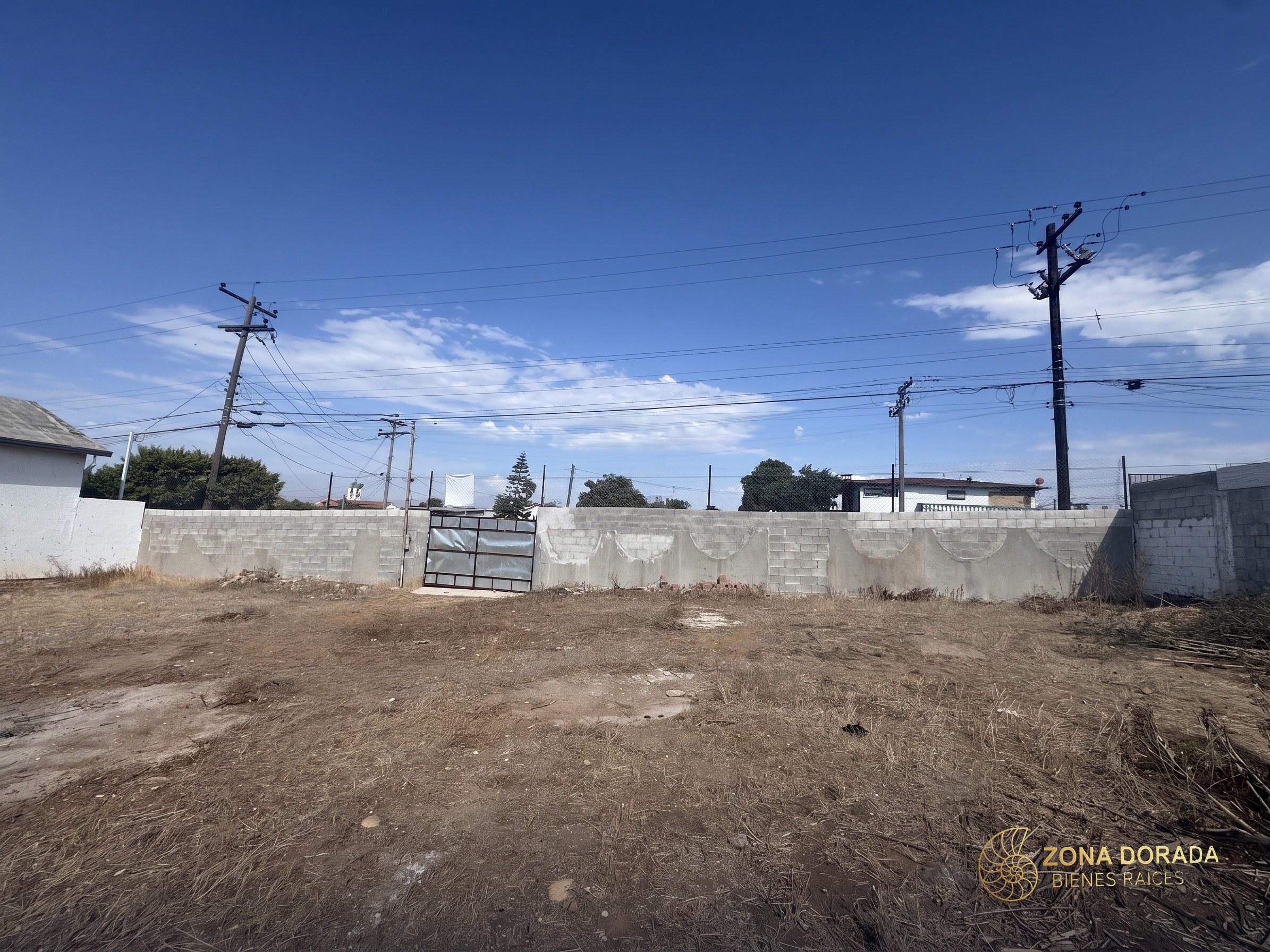
Terreno de 900 m² bardeado y con portón, uso comercial o residencial — Av. Londres, Col. Altamira
$7,632,000

Carretera Escénica
Casa nueva de 165 m² en Sueños del Mar — Carretera Escénica
$7,632,000

Carretera Escénica
Casa modelo con vista al mar — Sueños del Mar, Lote 13
$8,479,000
Keep reading
Buying in Mexico
Can a Foreigner Own Property in Tijuana? Yes — Here Is How the Fideicomiso Works
All of Tijuana sits inside Mexico's restricted zone, so a foreign buyer takes title through a bank trust. What that actually means, what it costs to budget for, and the one shortcut that costs people their house.
4 minBuying in Mexico
What Closing Actually Costs in Tijuana
Budget 7 to 10 percent on top of the price if you are buying with a fideicomiso. Here is what each line is, who charges it, and which ones you can shop for.
7 minBuying in Mexico
What Happens to Your Mexican Property When You Die
The fideicomiso lets you name beneficiaries directly, and that is the part almost nobody explains. Done right, your heirs skip the Mexican probate process entirely.
6 minQuestions about your case?
Every property and every buyer is different. Tell us your situation and we will tell you what to expect — in English, before you commit to anything.
Or message us: WhatsApp 663 122 9385